Oil Market Shakes: Geopolitical Tensions & Crude's Path to $100
The global oil market is once again navigating treacherous waters, rattled by recent geopolitical escalations in the Middle East. Following a targeted Iran attack fuels oil price surge, analysts and traders are bracing for significant volatility, with many experts predicting that crude oil could surge to the psychologically important $100 per barrel mark. This looming threat highlights the delicate balance between global energy supply and the combustible nature of regional politics, reminding us just how quickly events can ripple through international commodity markets.
The catalyst for this renewed concern stems from a recent offensive by the United States and Israel against targets in Iran. While the full extent of the military actions and their long-term repercussions are still unfolding, the immediate reaction in energy markets has been sharp and decisive. Futures contracts for Brent crude, the international benchmark, saw an almost 10% jump, while US West Texas Intermediate (WTI) also experienced a substantial hike. This sudden upward pressure underscores the critical role Iran plays in the global oil supply chain and the profound anxiety that any disruption to its output or regional stability can trigger.
Iran's Strategic Role in Global Oil Supply and the Geopolitical Chessboard
Iran is not merely another oil-producing nation; it is a titan in the energy landscape, possessing an estimated 10% of the world's proven crude oil reserves. This colossal endowment translates into significant daily production, with Iran pumping close to 3.3 million barrels per day (mbpd). For the Islamic Republic, oil exports are the lifeblood of its economy, with a staggering 80% to 90% of this crude destined for China, making Beijing a crucial partner despite international sanctions.
Beyond its vast reserves and production capacity, Iran holds a pivotal position within the Organization of the Petroleum Exporting Countries (OPEC), ranking as its third-largest producer by volume. Despite years of stringent sanctions, the Iranian oil industry has demonstrated remarkable resilience and consolidation, consistently contributing approximately 4.5% of the world's total crude output. This sustained presence means that any interruption to Iran's ability to produce or export oil would create a substantial deficit in global supply, far exceeding what other producers might readily compensate for.
The strategic importance of Iran extends beyond its borders, given its proximity to other major hydrocarbon-rich nations in the Middle East, a region that collectively holds nearly half of the world's oil reserves. Raymond Torres, Director of Economic Analysis at Funcas, notes that "If Iran's production capacity were affected, this would reduce market supply, pushing crude prices up to $100." This sentiment is echoed across market analyses, emphasizing that direct impacts on Iranian facilities, or indirect impacts through wider regional instability, pose a direct threat to global energy security.
The Strait of Hormuz: A Critical Chokepoint for Global Oil Flow
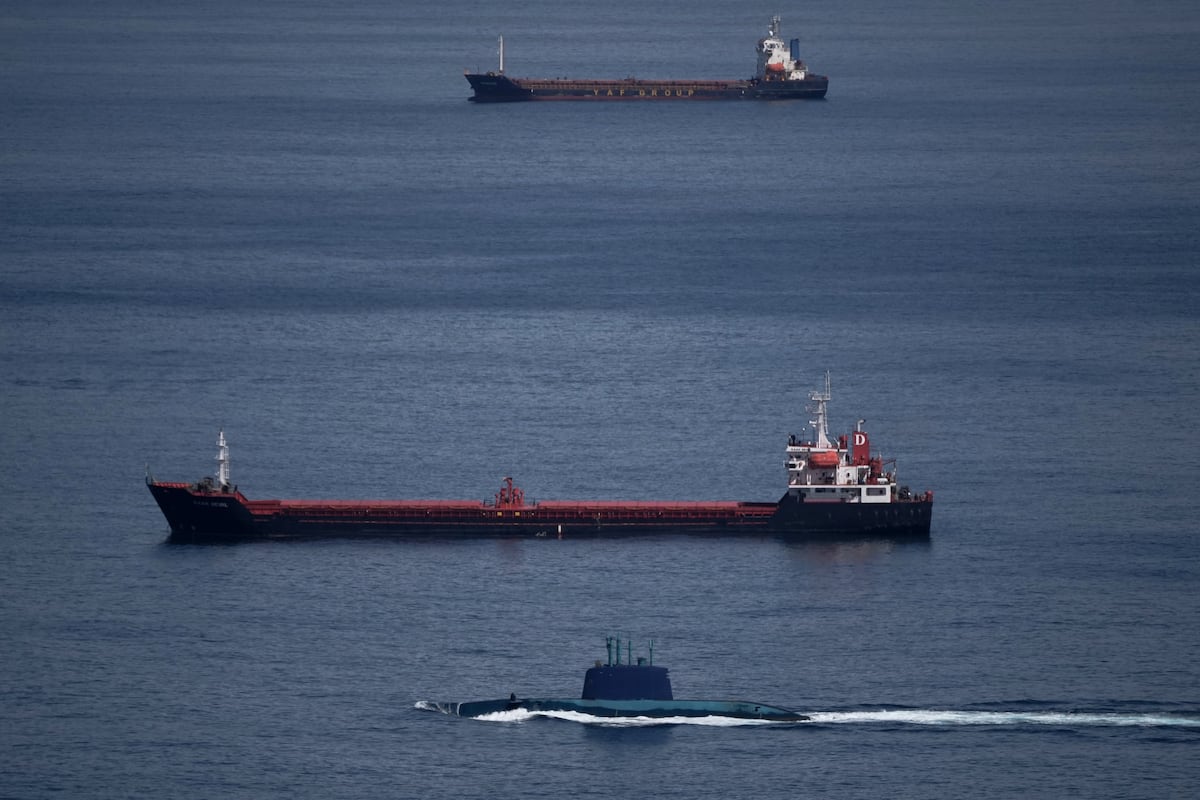
Perhaps the most potent weapon in Iran's arsenal, should it choose to escalate, is its geographical control over the Strait of Hormuz. This narrow waterway, nestled between Iran and Oman, is arguably the world's most critical oil transit chokepoint. An astonishing 20% of the world's total crude oil production, along with vast quantities of liquefied natural gas (LNG), transits through this strait daily. The possibility of Iran blocking this vital artery, either partially or fully, as a retaliatory measure, sends shivers down the spine of the global economy.
Manuel Pinto, an analyst at XTB, highlights this exact risk, stating that "oil prices could also rise due to the possibility of Iran blocking the Strait of Hormuz in response to the attack, through which 20% of global oil production passes." While Iran's Ambassador to Spain, Reza Zabib, has publicly asserted Iran's historical commitment to peaceful navigation through the strait, he also ominously noted that "all options are on the table." This ambiguity keeps global markets on edge, recognizing the immense leverage Iran wields through its strategic position.
A closure, even a temporary one, would not only halt the flow of Iranian oil but also severely disrupt exports from other major producers like Saudi Arabia, Iraq, UAE, and Qatar. The ripple effects would be catastrophic, leading to an immediate and massive supply shock that would undoubtedly send oil prices skyrocketing far beyond the $100 mark, potentially touching historical highs. For a deeper dive into this critical waterway, explore our related article: Strait of Hormuz Threat: How Iran Impacts Global Oil Markets.
Expert Projections: The Path to $100 Crude and Historical Precedents
Following the recent events, diverse experts are in broad agreement that the price of "black gold" is poised for a significant ascent. The Friday closing price for Brent crude was $72.48 per barrel. A surge to $100 would represent an increase of over 37%. When trading resumed after the attacks, the immediate market reaction saw Brent futures climb to around $79.30, an increase of 9.41% or $6.82, while US WTI futures reached approximately $72.30, gaining $5.28. This initial jump indicates the market's sensitivity and the strong upward pressure already in play.
As Ajay Parmar, Director of Energy and Refining at ICIS, rightly points out, “While military attacks are in themselves a bullish factor for oil, the key element here is the potential closure of the Strait of Hormuz.” This underscores that while direct impact on Iran's production is significant, the threat of broader disruption, particularly regarding the Strait, carries even greater weight in price formation.
Reaching $100 per barrel for crude oil is not unprecedented; history offers several sobering examples where geopolitical tensions propelled prices to similar or even higher thresholds:
- 2022: The Russian invasion of Ukraine sent oil prices soaring, briefly pushing Brent above $120.
- 2011-2014: A period marked by various conflicts and instability across the Middle East saw oil prices hover consistently above $100.
- 2008: Intense geopolitical pressures, coupled with robust global demand, saw Brent crude hit its all-time high of $146.08 per barrel on July 3, 2008.
These historical precedents serve as stark reminders that the current situation is not an anomaly but rather a recurring pattern in the volatile world of oil markets, driven by the intricate interplay of supply, demand, and geopolitical risk.
Beyond the Barrel: Wider Economic and Geopolitical Ripples
The potential surge of oil to $100 a barrel carries implications far beyond the trading desks. For consumers, particularly in countries that do not directly import Iranian oil (like many European nations), the indirect impact can still be substantial. Higher crude prices translate directly into elevated gasoline and diesel costs at the pump, impacting household budgets and corporate logistics alike. US RBOB gasoline futures, for instance, jumped over 5% to approximately $4.2070, indicating immediate pressure on refined products.
Economically, sustained high oil prices act as a tax on global growth. They can fuel inflation, force central banks to maintain tighter monetary policies, and potentially tip vulnerable economies into recession. Businesses face increased operational costs, supply chains become more expensive, and consumer purchasing power erodes. Governments may face pressure to intervene with subsidies or tax cuts, further complicating fiscal policy.
Geopolitically, the escalation around Iran could destabilize the entire Middle East, a region already fraught with complexities. Raymond Torres adds that Iran possesses the military capability to strike targets across the region, further escalating tensions. This could lead to a broader conflict involving multiple actors, with devastating consequences for regional security and global trade routes. Energy security for importing nations would become a paramount concern, potentially leading to increased diversification efforts or the release of strategic petroleum reserves.
Practical Implications & Advice:
- For Businesses: Prepare for increased energy costs. Review supply chain resilience and explore hedging strategies for fuel expenses.
- For Consumers: Expect higher fuel prices. Consider fuel-efficient transportation options and monitor global news for market updates.
- For Policymakers: Emphasize diplomatic solutions to de-escalate tensions and explore collaborative efforts to ensure energy market stability.
Conclusion
The recent Iran attack fuels oil price surge is a stark reminder of the global oil market's inherent sensitivity to geopolitical events. With Iran's significant oil reserves, strategic control over the Strait of Hormuz, and its pivotal role within OPEC, any military action or threat of disruption profoundly impacts the world's energy lifeline. Experts widely anticipate crude oil prices to test, and likely exceed, the $100 per barrel threshold, drawing parallels to previous periods of heightened global instability.
While the immediate market reaction has been swift, the long-term trajectory of oil prices will hinge on the de-escalation of tensions and the avoidance of any blockage in the Strait of Hormuz. The stakes are incredibly high, not just for oil traders, but for global economic stability, inflation control, and the everyday consumer. As the situation evolves, vigilance and adaptability will be key for governments, businesses, and individuals navigating the turbulent waters of the international oil market.