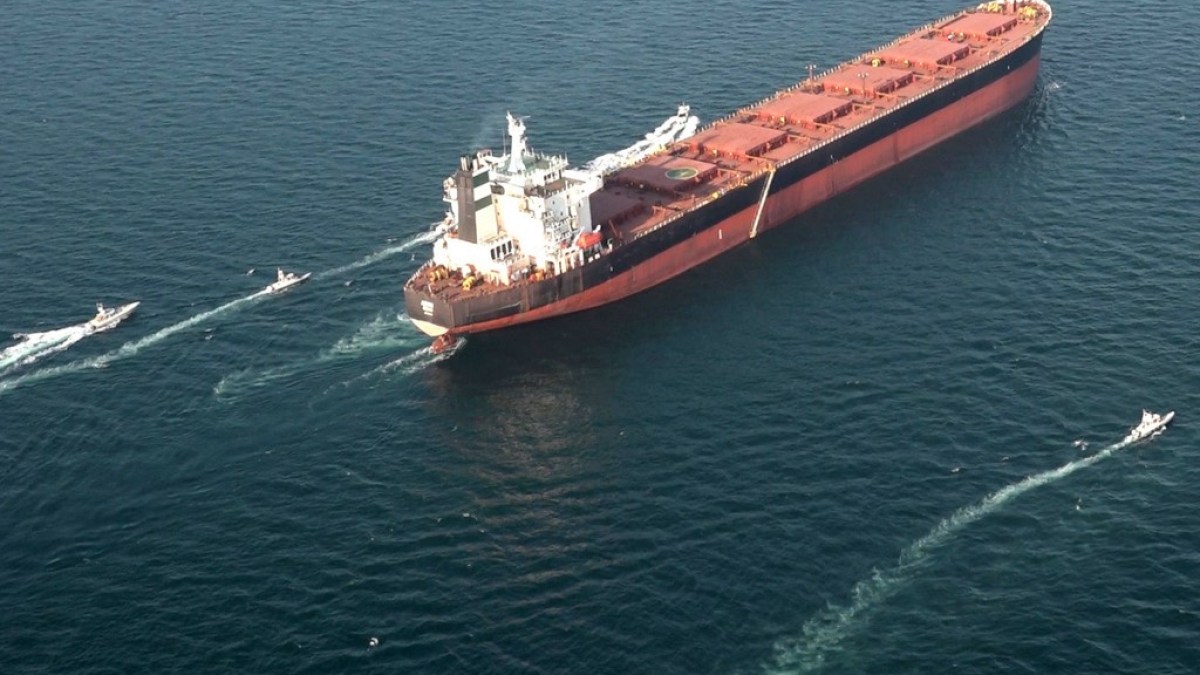
Strait of Hormuz Threat: How Iran Impacts Global Oil Markets
The geopolitical landscape of the Middle East has always cast a long shadow over global energy markets. Few factors wield as much potential influence on oil prices as the actions and strategic positioning of Iran, particularly concerning the narrow, yet incredibly vital, Strait of Hormuz. Any significant escalation of tensions, often dubbed as an "Iran oil attack" scenario by market watchers – referring to an attack *on* Iran with oil implications, or Iran's potential actions *affecting* oil – can send seismic waves through the global economy, reminding us of the fragility of energy supply chains. This article delves into Iran's critical role, the strategic importance of the Strait of Hormuz, and the tangible economic consequences of potential disruptions.
Iran's Pivotal Role in Global Oil Supply
Iran is far more than just another oil-producing nation; it is a heavyweight in the global energy arena. Possessing approximately 10% of the world's proven crude oil reserves, its capacity to influence supply is undeniable. The country maintains a robust production of around 3.3 million barrels per day (bpd), a figure that not only underscores its economic reliance on oil but also its significant contribution to global output. This production is the lifeblood of the Islamic Republic's economy, with a substantial 80% to 90% of its crude exports directed towards China, a key strategic partner and energy consumer.
Despite a long history of international sanctions, the Iranian oil industry has demonstrated remarkable resilience and a consolidated position as a prominent player, contributing roughly 4.5% of global crude pumping. This enduring capacity means that any disruption to Iran's production, whether from internal issues or external pressures, has immediate repercussions. While European countries might not directly import Iranian crude, the ripple effect is profound. As the third-largest crude producer within the Organization of the Petroleum Exporting Countries (OPEC) by volume, Iran's supply fluctuations directly impact overall OPEC output and global market sentiment. Experts often warn that if Iran's production capacity were to be significantly affected, the resultant reduction in global supply could trigger a sharp increase in crude oil prices, potentially pushing Brent crude towards the $100 per barrel mark or even higher.
The Strait of Hormuz: A Chokepoint of Critical Importance
If Iran is a major player, the Strait of Hormuz is the stage upon which much of its geopolitical influence is projected. This narrow waterway, connecting the Persian Gulf to the open ocean, is arguably the most critical oil transit chokepoint in the world. An astonishing 20% of the globe's total crude oil production, along with a significant portion of liquefied natural gas (LNG), transits through this 21-mile-wide passage daily. Tankers laden with oil from major producers like Saudi Arabia, Iraq, Kuwait, UAE, and Qatar must all pass through Iranian-controlled waters.
Iran's strategic location, adjacent to other hydrocarbon-rich nations in the Middle East that collectively hold nearly half of the world's reserves, amplifies its leverage over the Strait. The possibility of Tehran threatening to block or disrupt traffic in the Strait of Hormuz in response to perceived threats or military action – a scenario often discussed in the context of an "Iran oil attack" or retaliatory measures – is what truly ignites fears in global markets. While Iran's ambassador to Spain, Reza Zabib, has stated that all options are on the table but emphasized Iran's commitment to peaceful navigation, the military capability Iran possesses to affect regional targets cannot be underestimated. A disruption, even a temporary one, could have catastrophic consequences for global energy supply and prices. It’s this constant underlying threat that keeps traders and policymakers on edge.
Escalating Tensions and Market Reactions
The mere specter of heightened geopolitical tensions involving Iran can send financial markets into a frenzy. Historical incidents and hypothetical scenarios involving military action against Iran, or significant internal instability, have consistently demonstrated a predictable market reaction: a sharp surge in oil prices. For instance, following reports of specific attacks or intensified hostilities, futures markets have shown immediate and dramatic responses. Brent crude futures, a benchmark for European oil, have historically jumped significantly, sometimes by more than 9%, mirroring the volatility seen in other energy derivatives like US WTI crude and even RBOB gasoline futures.
Such rapid increases reflect the market's deep-seated anxiety over supply security. When the risk of an "Iran oil attack" – implying a situation where Iran's oil infrastructure is targeted or Iran itself targets oil transit – becomes more pronounced, experts quickly project price hikes. Many analysts concur that the price of "black gold" could easily reach $100 per barrel, representing a substantial increase of over 37% from baseline prices. This isn't just a speculative guess; it's a calculated risk assessment based on the potential for reduced supply from Iran and, more critically, the possibility of a Strait of Hormuz blockade.
As Raymond Torres, director of Economic Trends at Funcas, noted, any impact on Iran's production capacity would directly reduce market supply, inevitably driving prices higher. Similarly, Manuel Pinto, an XTB analyst, highlighted the potential for the Strait of Hormuz closure as a primary factor in pushing oil prices to critical thresholds. These scenarios, though often hypothetical, serve as powerful reminders of the interconnectedness of geopolitics and global economics. For more on these market dynamics, you can read about the
Iran Attack Fuels Oil Price Surge: Is $100 a Barrel Imminent?
Beyond the Headlines: Broader Economic Implications and What to Watch For
The implications of oil prices soaring to $100 per barrel extend far beyond the energy sector. Such a surge creates a cascading effect across the global economy. For consumers, it translates directly into higher gasoline prices, increased heating and electricity costs, and ultimately, a rise in the price of virtually all goods and services due due to increased transportation and manufacturing expenses. This inflationary pressure can stifle economic growth, reduce consumer spending, and potentially trigger recessions in vulnerable economies.
Businesses face escalating operational costs, impacting profitability and investment decisions. Industries reliant on fossil fuels, from aviation to logistics and manufacturing, would bear the brunt of these price hikes. Geopolitical ripple effects are also significant, as high oil prices can exacerbate political instability in importing nations and shift global power dynamics. This wouldn't be the first time crude oil has reached such heights during times of geopolitical tension. Historical precedents include the 2022 invasion of Ukraine by Russia, the period between 2011 and 2014 during various Middle East conflicts, and the 2008 crisis, which saw Brent crude peak at an astounding $146.08 per barrel. Understanding these past events is crucial for anticipating future market movements. Delve deeper into the broader market context with
Oil Market Shakes: Geopolitical Tensions & Crude's Path to $100.
Navigating Uncertainty: Tips for Businesses and Consumers
In an environment where the threat of an "Iran oil attack" – whether on its infrastructure or its potential to disrupt global supplies – remains a constant concern, proactive strategies are essential for both businesses and consumers:
* **For Businesses**:
* **Diversify Energy Sources**: Explore alternative energy solutions or enhance energy efficiency to reduce reliance on volatile oil markets.
* **Hedging Strategies**: Consider financial instruments to hedge against extreme price fluctuations, providing a degree of predictability for operational costs.
* **Supply Chain Resilience**: Map out potential vulnerabilities in your supply chain to identify and mitigate risks associated with energy price shocks.
* **Monitor Geopolitical Developments**: Stay informed about international relations, particularly in the Middle East, as early warnings can allow for timely adjustments.
* **For Consumers**:
* **Energy Conservation**: Simple steps like carpooling, using public transport, and improving home insulation can reduce personal energy consumption and expenditure.
* **Budgeting**: Factor potential increases in fuel and utility costs into your personal or household budget.
* **Advocate for Policy**: Support policies that promote renewable energy, energy independence, and strategic energy reserves to buffer against future shocks.
* **For Governments and International Bodies**:
* **Diplomatic Engagement**: Prioritize diplomacy to de-escalate tensions in critical regions and foster stable international relations.
* **Strategic Petroleum Reserves (SPR)**: Maintain and, where appropriate, expand SPRs to provide a crucial buffer against sudden supply disruptions.
* **Investment in Renewables**: Accelerate the transition to sustainable energy sources to reduce global reliance on fossil fuels from volatile regions.
Conclusion
Iran's indelible mark on global oil markets, largely amplified by its control over the Strait of Hormuz, makes it a perennial focal point for energy security discussions. The potential for an "Iran oil attack" scenario – whether a military strike impacting its output or Iran's own actions to disrupt the vital chokepoint – underscores the inherent volatility of crude prices. As history has repeatedly shown, geopolitical tensions in the Middle East directly translate into immediate and significant economic ramifications worldwide. Staying informed, understanding the intricate dynamics of supply and demand, and implementing proactive strategies are paramount for navigating the complexities of a global economy inextricably linked to the ebb and flow of oil from this critical region. The Strait of Hormuz remains a testament to the fragile balance between energy supply, national interest, and global stability.